AUSTRALIA'S LEADING SPECIALIST IN KLOBE VACUUM BELL TREATMENT

AUSTRALIA'S LEADING SPECIALIST IN KLOBE VACUUM BELL TREATMENT

The vacuum bell device is a soft, dome-shaped apparatus, typically made of silicone. This non-surgical therapy is placed over the sunken area of the chest, and a small hand pump is used to create gentle suction inside the bell.
This suction performs two primary functions:

Vacuum Bell Therapy (VBT) is a non-surgical therapy for Pectus Excavatum treatment. While this method is highly effective, patient safety remains our top priority. We prefer a doctor’s referral for all patients to ensure they are suitable candidates for this innovative approach using a vacuum bell device.
VBT is generally most successful for candidates who fit these clinical indicators:
Success Indicators (Haecker's Groups)
We utilize the Haecker classification to estimate your treatment timeline:

Before beginning treatment, your doctor must confirm you do not have the following contraindications:

While many "suction" devices are available online, the Eckart Klobe vacuum bell device stands out as the only option with extensive clinical peer-reviewed data supporting its safety and efficacy in Pectus Excavatum treatment.
The "Haecker" Research Findings
Our non-surgical therapy plans are based on the studies published by Dr. Frank-Martin Haecker from the University Children’s Hospital in Basel. Key findings from his research include:
For references to more research on the vacuum bell please click below!
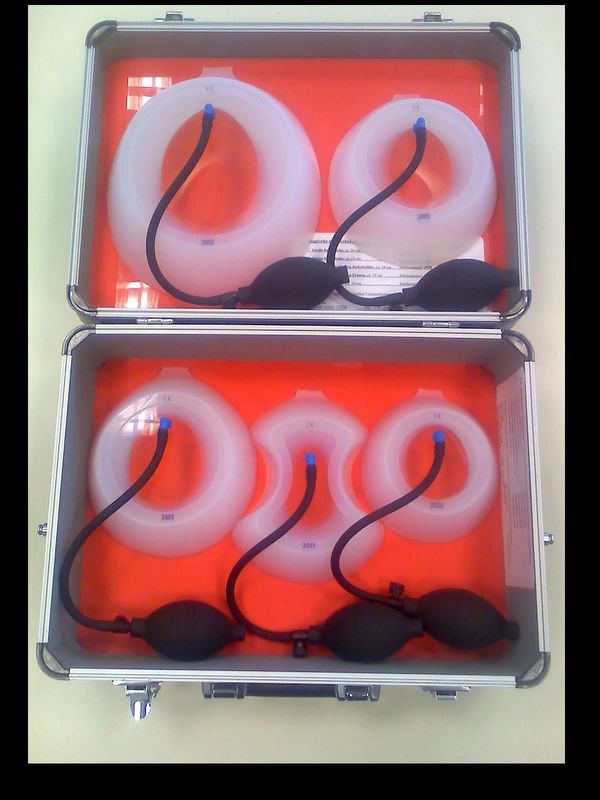
It's important to recognize that not all vacuum bell devices are supported by the same level of scientific research. The Eckart Klobes Vacuum Bell is currently the only device that has accumulated a substantial body of evidence and published journal papers supporting its use as an effective non-surgical therapy for pectus excavatum treatment. This extensive research provides confidence in its design and effectiveness for patient care.
Research emphasises that clinical oversight is essential for success. Self-treating with uncertified vacuum bell devices purchased online carries risks of skin necrosis, rib pain, and ineffective correction.
As Australia’s specialist centre, we provide:
Recent medical research supports the idea that Vacuum Bell Therapy, a non-surgical therapy for treating pectus excavatum, is a safe option with few complications reported. However, the success of this Pectus Excavatum treatment largely depends on patient compliance and motivation. To properly assess the permanence of correction after completing the therapy, rigorous follow-up is necessary, as the long-term success remains in the hands of the patient utilizing the vacuum bell device.
To ensure the best outcomes for our patients using the vacuum bell device, we utilize 3D scanning technology (the Structure Sensor system). This radiation-free protocol allows us to capture a highly accurate digital map of the chest, providing an objective way to measure the physical changes in the chest wall over time.
Why 3D Scanning?
Traditionally, the severity of Pectus Excavatum has been measured using the Haller Index (HI), which typically requires a CT scan or MRI. While effective, CT scans involve radiation, and MRIs can be time-consuming and costly for regular monitoring.
Our 3D scanning system provides a safer, "X-ray-free" alternative. By creating a 3D digital model of your chest, we can calculate the External Haller Index (EHI). Research has shown that the EHI measured via 3D scanning correlates strongly with the internal Haller Index measured by MRI, making it an excellent and reliable tool for routine clinical follow-up!
Evidence-Based Monitoring
Our scanning protocol is guided by the latest medical research, specifically the study:
"Efficiency of non-operative management for pectus deformities in children using an X-ray-free protocol" (Published in Interdisciplinary CardioVascular and Thoracic Surgery, 2023).
This research demonstrates that:
Tracking Your Success
During your consultations, we will use the External Haller Index (EHI) to determine exactly how effectively the vacuum bell device is reshaping the chest. By comparing your scans over several months, we can adjust your treatment plan to ensure we are achieving the best possible cosmetic and functional results.

